
Glaucoma Symptoms: What You Can and Cannot Feel
Here is the most important fact on this page: about 99 percent of glaucoma has no symptoms at all. No pain, no redness, no blur, nothing you can feel. Symptoms usually appear only as vision loss very late in the disease. That is exactly what makes glaucoma dangerous, and exactly why screening matters.
The Silent 99 Percent
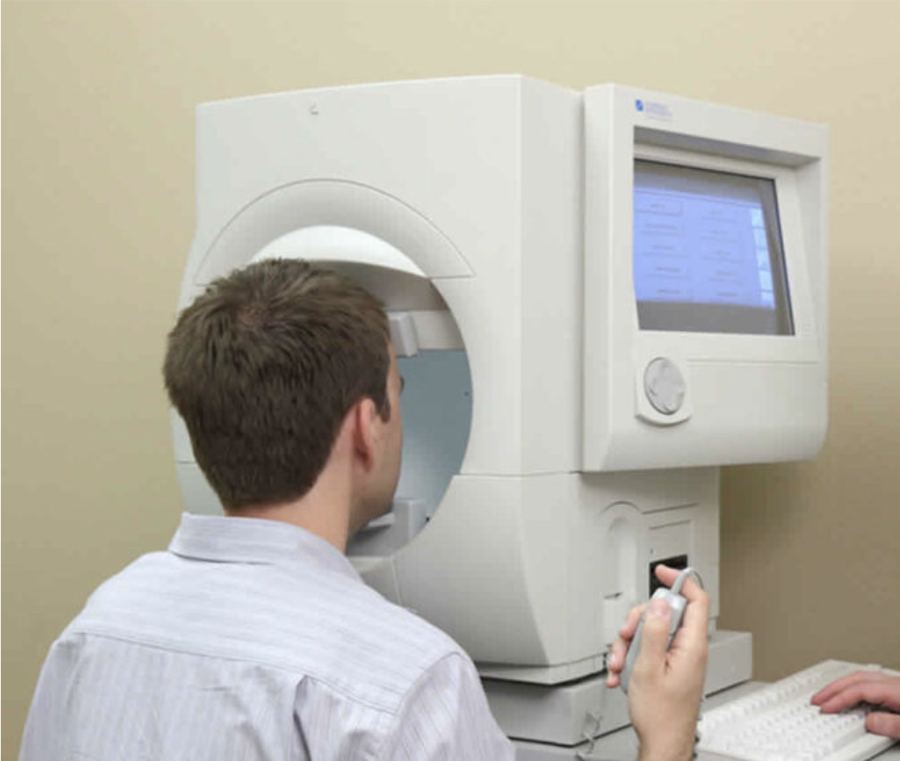
The most common form of the disease, open-angle glaucoma, is silent. Eye pressure rises slowly, the optic nerve loses fibers gradually, and nothing hurts. The damage begins in your side vision, where the brain quietly fills in the missing patches. Because the two eyes overlap, one eye covers for the other. Most people feel completely normal until the disease is very advanced.
By the time glaucoma causes symptoms you would notice, such as missing spots, trouble with stairs and curbs, or difficulty driving at night, a large share of the optic nerve is already gone, and that vision cannot be brought back. This is why glaucoma is called the silent thief of sight, and why screening and diagnosis exist as a specialty of their own.
Why a normal pressure reading can still miss glaucoma →The Glaucomas That Do Cause Symptoms
A minority of glaucomas announce themselves. These are the exceptions to the silent rule, and some of them are emergencies.

Acute Angle Closure Glaucoma
The eye's drainage angle closes suddenly and pressure spikes within hours. Symptoms are dramatic: severe eye pain, a red eye, blurred vision, halos or rainbows around lights, headache on the same side, and often nausea and vomiting. This is a true emergency. Same-day treatment, usually including laser iridotomy, protects the optic nerve.
Intermittent Angle Closure
Some people with narrow angles have brief, self-resolving episodes: blurred vision, halos around lights, or a dull brow ache, often in dim light such as a movie theater, that improves with sleep or bright light. These episodes are a warning that a full attack may be coming, and they deserve prompt evaluation with gonioscopy. Conditions such as plateau iris syndrome behave similarly.
Secondary Glaucomas
Glaucoma caused by another eye problem can be symptomatic. Uveitic glaucoma causes light sensitivity, aching, and redness from inflammation. Posner-Schlossman syndrome causes recurrent one-sided pressure spikes with mild blur or halos. Pigment dispersion can cause blur and halos after exercise. Neovascular glaucoma causes pain and redness in an eye that often already sees poorly. Angle recession glaucoma follows an eye injury, sometimes years later.
That Pressure Feeling in Your Eye: Usually Not Eye Pressure

Many patients come in saying they can feel pressure in their eye and worry it is glaucoma. Here is the honest answer: actually feeling your intraocular pressure is extremely rare. You can have very elevated eye pressure and not notice anything at all. When something around the eye feels like pressure, the cause is usually nearby rather than inside the eye, and sinusitis is the most common culprit. Dry eye, eye strain, headache disorders, and even an outdated glasses prescription are other frequent explanations.
That said, no eye pain or pressure sensation should be ignored. Every source of eye pain or pressure should be checked out right away. If the exam shows your eye pressure is normal, the feeling may be due to sinus disease or simply a need for glasses, and that is genuinely good news. If the pressure is elevated, you have caught something silent early, which is the best possible time to catch it. Either way, you leave with an answer.
What high eye pressure means when it is found →Symptoms That Need Same-Day Care
Call us or seek urgent care immediately if you notice any of the following:
- ✓ Sudden severe eye pain, especially with headache or nausea
- ✓ Sudden blurred vision with a red eye
- ✓ Halos or rainbows around lights
- ✓ Repeated episodes of dim-light blur or brow ache that come and go
- ✓ Eye pain after an eye injury, recent surgery, or during an inflammation flare
- ✓ Any new blind spot, shadow, or missing patch in your vision
No Symptoms Is Not the Same as No Glaucoma
Since the common forms of glaucoma cannot be felt, the only way to catch them early is to look. A comprehensive evaluation measures your eye pressure, examines and images the optic nerve, tests your visual field, and inspects the drainage angle. Screening matters most if you are over 40, have a family member with glaucoma, are of African, Hispanic, or Asian ancestry, are very nearsighted or farsighted, use steroids, or have had an eye injury.
Frequently Asked Questions
What are the symptoms of glaucoma?
In about 99 percent of cases, glaucoma has no symptoms at all. The most common form, open-angle glaucoma, causes no pain, no redness, and no change you can feel. Vision loss appears only very late in the disease, usually as missing patches in side vision. A minority of glaucomas do cause symptoms, including acute angle closure, intermittent angle closure, and some secondary glaucomas, which can produce eye pain, halos around lights, blurred vision, redness, headache, and nausea.
Can you feel high eye pressure?
Almost never. Actually feeling your eye pressure is extremely rare, and people can have very elevated pressure without noticing anything. A feeling of pressure around the eye is usually caused by something else, most often sinusitis, and sometimes dry eye, eye strain, or simply a need for glasses. Even so, every source of eye pain or pressure should be checked promptly.
What does an acute angle closure attack feel like?
Sudden severe eye pain, a red eye, blurred vision, halos or rainbows around lights, headache on the same side, and often nausea or vomiting. It is a medical emergency: pressure can rise high enough to damage the optic nerve within hours, so same-day treatment is essential.
Why does my eye feel pressure if my eye pressure is normal?
When the exam shows normal eye pressure, a pressure sensation is usually coming from a nearby structure. Sinus disease is the most common cause. Dry eye, eye strain from uncorrected vision, an outdated glasses prescription, and headache disorders are other frequent explanations. An exam sorts this out and rules out the rare pressure-related causes.
If glaucoma has no symptoms, how is it caught early?
Through a comprehensive eye exam. Eye pressure measurement, optic nerve examination and imaging, and visual field testing can detect glaucoma years before any vision change is noticeable. Start with our glaucoma risk calculator, then schedule a screening evaluation.
Worried about a symptom, or overdue for a glaucoma check? Our board-certified glaucoma specialists will give you a clear answer.