
Open-Angle Glaucoma
Open-angle glaucoma is the most prevalent type of glaucoma and a major contributor to irreversible blindness globally. It develops gradually, often without noticeable symptoms until significant vision loss occurs.
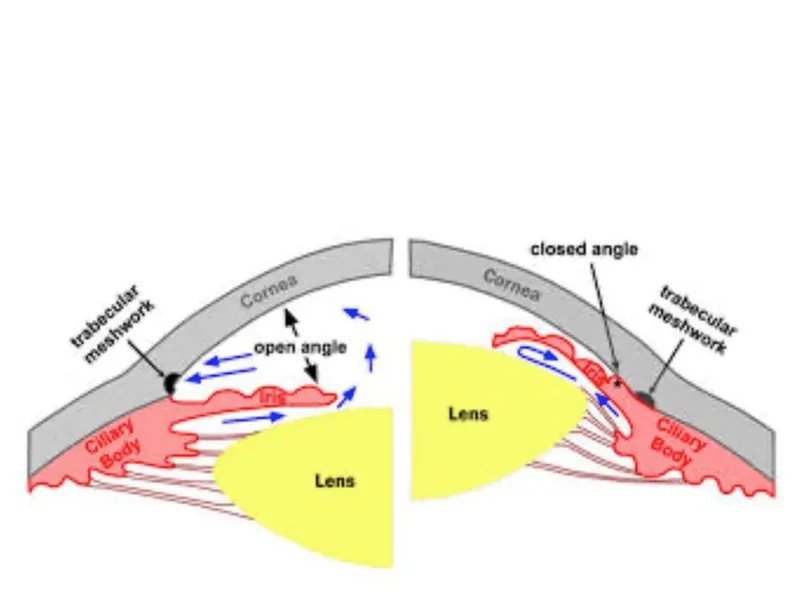
Open-angle glaucoma is primarily caused by damage to the optic nerve, typically resulting from elevated intraocular pressure (IOP) due to impaired drainage of aqueous fluid within the eye. Effective eye pressure management is crucial in mitigating the risks associated with this disease.
In a healthy eye, aqueous fluid flows continuously through the trabecular meshwork, a microscopic drainage channel located in the angle between the iris and the cornea. In open-angle glaucoma, this drainage angle remains “open,” yet the trabecular meshwork becomes partially obstructed, leading to a slow increase in eye pressure and progressive optic nerve damage. Understanding glaucoma treatment options is essential for preserving vision and managing this condition effectively.
Learn more about what glaucoma is →Types of Open-Angle Glaucoma
1. Primary Open-Angle Glaucoma (POAG)
This is the classic and most common form of glaucoma. Over time, the drainage system of the eye becomes less efficient, leading to increased eye pressure and slowly damaging the optic nerve. POAG often develops painlessly and without vision changes until advanced stages, highlighting the importance of effective eye pressure management and timely glaucoma treatment.
2. Normal-Tension Glaucoma (NTG)
In this type of glaucoma, optic nerve damage can occur even when eye pressure remains within the normal range. Factors such as reduced blood flow to the optic nerve, vascular dysregulation, or genetic predisposition may contribute to the condition, highlighting the importance of eye pressure management in effective glaucoma treatment.
3. Secondary Open-Angle Glaucoma
This occurs as a result of another eye condition or external factor, such as inflammation, steroid use, trauma, pigment dispersion, or pseudoexfoliation glaucoma, that obstructs fluid drainage and raises eye pressure. Understanding these factors is important in the context of glaucoma treatment.
Diagnosis
Because open-angle glaucoma progresses silently, regular comprehensive eye exams are critical for early detection and effective eye pressure management. Diagnosis typically involves:
- Measurement of intraocular pressure (tonometry)
- Examination of the optic nerve (ophthalmoscopy or OCT imaging)
- Visual field testing to detect early vision loss
- Corneal thickness measurement (pachymetry)
- Gonioscopy to assess the drainage angle
Treatment Options
Although glaucoma damage cannot be reversed, early and consistent glaucoma treatment can slow or prevent further vision loss. This treatment primarily focuses on eye pressure management to protect the optic nerve.
1. Laser Therapy
Selective Laser Trabeculoplasty (SLT) is a highly effective and minimally invasive laser treatment used to manage eye pressure in patients with open-angle glaucoma. This procedure improves fluid outflow through the trabecular meshwork and is often recommended as a first-line or adjunct therapy, potentially reducing the need for daily drops.
Learn more about the LiGHT study →2. Eye Drops
Medicated drops are typically the first line of glaucoma treatment. These medications function by either reducing fluid production or enhancing drainage. Common types include prostaglandin analogs, beta blockers, alpha agonists, and carbonic anhydrase inhibitors.
3. Oral Medications
Oral medications are typically used when eye drops and laser therapies fail to adequately control intraocular pressure (IOP). These systemic drugs reduce the production of aqueous humor, the fluid inside the eye. Carbonic Anhydrase Inhibitors (CAIs) are the primary oral drugs employed for managing glaucoma; they work by inhibiting the enzyme carbonic anhydrase in the ciliary body, decreasing the production of aqueous humor.
Common oral CAIs include:
- Acetazolamide (Diamox), the most widely used oral medication for glaucoma, available in both regular and extended-release forms.
- Methazolamide (Neptazane), operates on a similar mechanism but is generally better tolerated, resulting in fewer side effects.
4. Minimally Invasive Glaucoma Surgery (MIGS)
MIGS procedures, such as the iStent, Hydrus Microstent, or OMNI canaloplasty, enhance natural drainage pathways with minimal tissue disruption. These procedures are often performed during cataract surgery, providing added benefit for patients with open-angle glaucoma.
5. Conventional Glaucoma Surgery
In advanced or unresponsive cases of open-angle glaucoma, traditional procedures such as trabeculectomy or glaucoma drainage implants (Ahmed or Baerveldt valves) create new drainage pathways for effective eye pressure management.
Frequently Asked Questions
What is open-angle glaucoma?
Open-angle glaucoma is the most common type of glaucoma. It develops gradually and often without symptoms, typically caused by elevated eye pressure from impaired drainage of fluid through the trabecular meshwork, leading to progressive optic nerve damage.
What is the difference between open-angle and closed-angle glaucoma?
In open-angle glaucoma, the drainage angle remains open but the trabecular meshwork is partially obstructed, causing a slow rise in eye pressure. In closed-angle (narrow-angle) glaucoma, the drainage angle itself becomes physically blocked, which can cause a sudden, dangerous spike in eye pressure. Learn more about narrow-angle glaucoma →
Is open-angle glaucoma curable?
Glaucoma damage that has already occurred cannot be reversed, but early and consistent treatment can slow or prevent further vision loss by managing eye pressure.
What treatments are available for open-angle glaucoma?
Treatment options include Selective Laser Trabeculoplasty (SLT), prescription eye drops, oral medications, minimally invasive glaucoma surgery (MIGS), and conventional surgery such as trabeculectomy or glaucoma drainage implants for advanced cases.
Concerned about open-angle glaucoma or elevated eye pressure? Schedule a comprehensive evaluation today.