
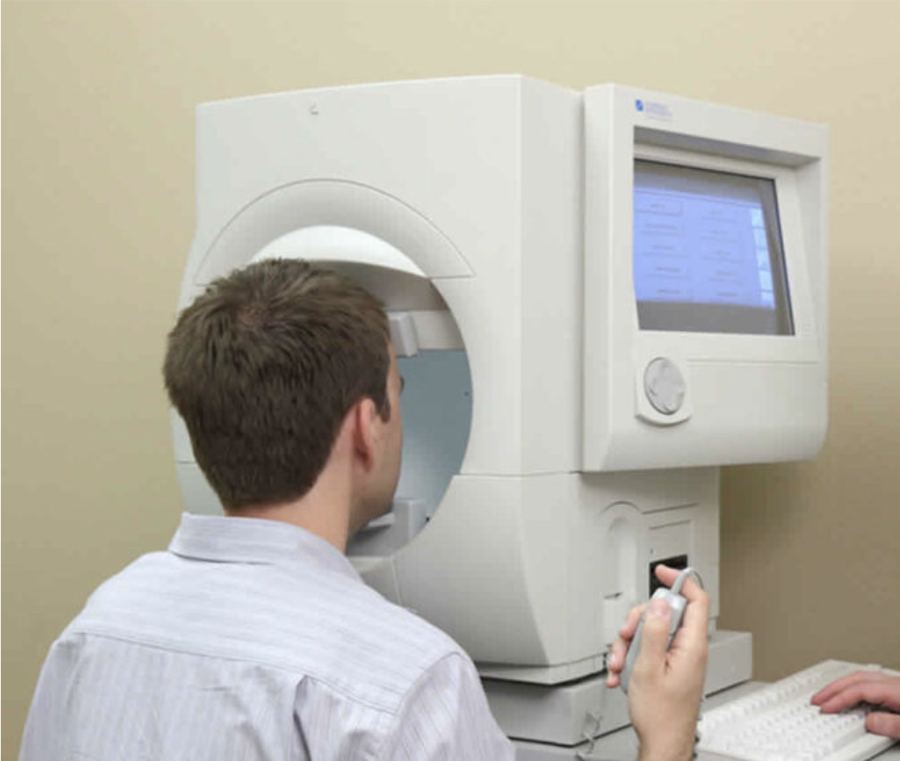
If you've ever taken a visual field test, you're not alone in thinking that it was stressful, confusing, or difficult. Many patients worry they did something wrong or that the test does not reflect how they actually see. These reactions are extremely common. Visual field testing is one of the hardest tests we ask patients to perform, yet it remains one of the most important tools for monitoring glaucoma.

Why Visual Field Tests Feel So Difficult
Visual field tests require sustained focus and patience. You are asked to stare at a single point while responding to faint lights that appear unpredictably. Fatigue, distraction, blinking, or dry eyes can all affect performance, and this is completely normal.
The test is subjective. Unlike many medical tests, visual fields rely on patient responses. Two tests done on different days can look different even when glaucoma has not changed. This natural variability is expected and accounted for by your doctor.
Anxiety can also interfere with performance. Many patients worry about missing lights or failing the test. There is no passing or failing, the goal is simply to measure how your vision responds at that moment.
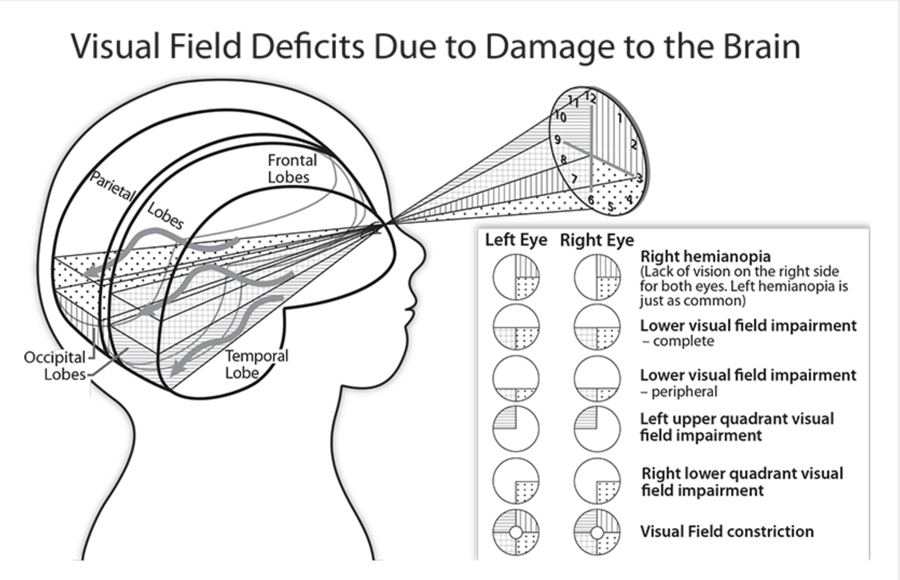
Peripheral vision is difficult to judge. Glaucoma often affects side vision first, and the brain is not good at noticing subtle changes in peripheral vision. The test may detect changes you do not notice in daily life.
Why Visual Field Tests Still Matter
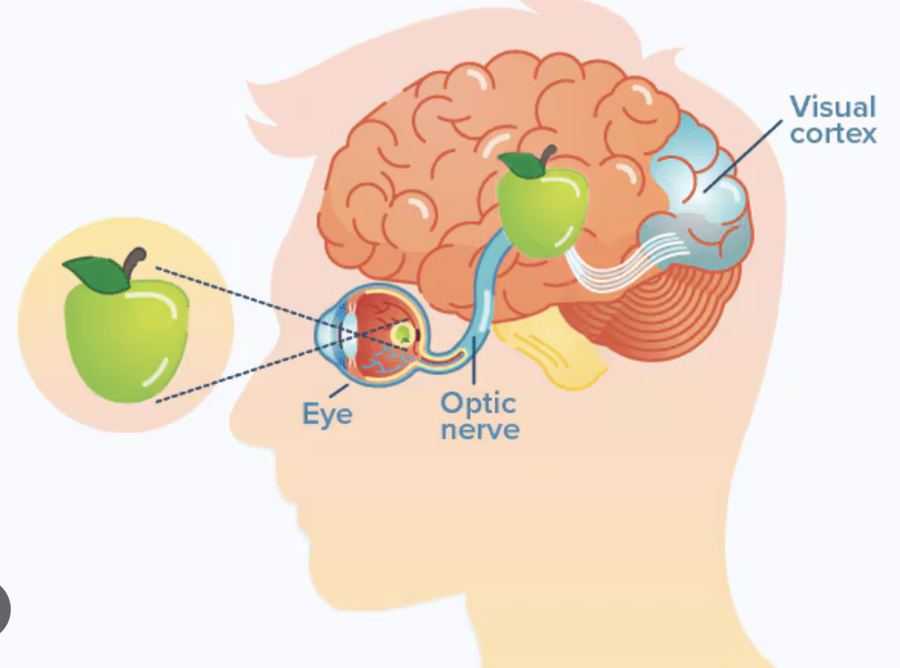
They show how glaucoma affects functional vision. Imaging tests look at the structure of the optic nerve, but visual fields show how vision is working in real life, especially side vision.
They help detect change over time. One visual field test alone rarely tells the full story. Doctors look for patterns and trends across multiple tests to determine whether glaucoma is stable or changing.
They guide treatment decisions. Stable visual fields suggest current treatment is effective. Worsening fields may lead to adjustments in care.
They complement other glaucoma tests. No single test manages glaucoma on its own. Visual fields work together with eye pressure measurements, optic nerve exams, and imaging studies to provide a complete picture.
What You Should Know
One abnormal visual field test does not mean glaucoma has worsened. Difficulty with the test does not mean you did anything wrong. Your glaucoma doctor expects variability and focuses on trends, not perfection. Several tests are often needed to establish a reliable baseline for you and your peripheral vision.
How You Can Make the Test Easier in Our Clinic
Get good rest before testing. Stay comfortable. Blink normally. Let us know if you feel anxious or uncomfortable, it's okay to take a break or even restart if you feel like something is not right with the machine or your positioning.
In summary, visual field tests are challenging because they ask a lot of patients, but they remain essential for protecting vision over time. They are not designed to catch mistakes but to help guide thoughtful, long-term glaucoma care.
References
- American Academy of Ophthalmology. Primary Open-Angle Glaucoma Preferred Practice Pattern. American Academy of Ophthalmology, 2020. American Academy of Ophthalmology. Automated Perimetry in Glaucoma. American Academy of Ophthalmology. National Eye Institute. Glaucoma. National Institutes of Health. Chauhan, Balwantray C., et al. "Practical Recommendations for Measuring Rates of Visual Field Change in Glaucoma." Ophthalmology, vol. 115, no. 2, 2008, pp. 255-261.