
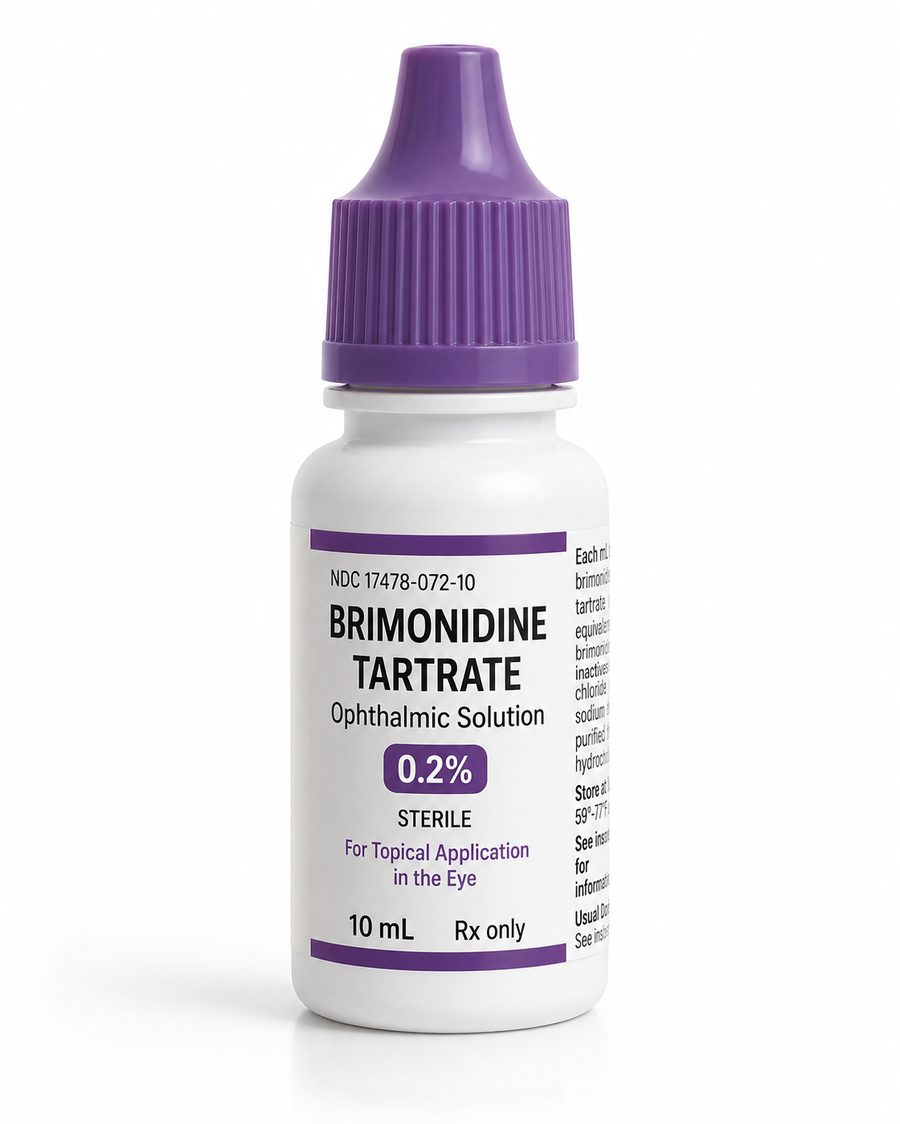
If one has been diagnosed with glaucoma or ocular hypertension (higher-than-normal eye pressure), an ophthalmologist may prescribe brimonidine to help protect their vision.
Brimonidine has been used for more than two decades and is one of the most commonly prescribed glaucoma medications worldwide. While it isn't usually the first medication prescribed for every patient, it is an effective treatment that can significantly lower eye pressure and is often used either by itself or in combination with other glaucoma medications.
So what exactly is brimonidine? How does it work? And what side effects should one know about before starting it?
Let's take a closer look.
A Brief History of Brimonidine
Brimonidine was developed as an improvement over earlier medications in the same class because it lowers eye pressure effectively while causing fewer side effects throughout the rest of the body.
The U.S. Food and Drug Administration (FDA) approved brimonidine tartrate 0.2% (Alphagan®) in 1996. A newer formulation, Alphagan P®, was later introduced using a different preservative system that many patients find gentler on the ocular surface.
Today, brimonidine remains one of the most widely prescribed glaucoma medications and is frequently combined with other eye drops when additional pressure lowering is needed.
How Does Brimonidine Work?
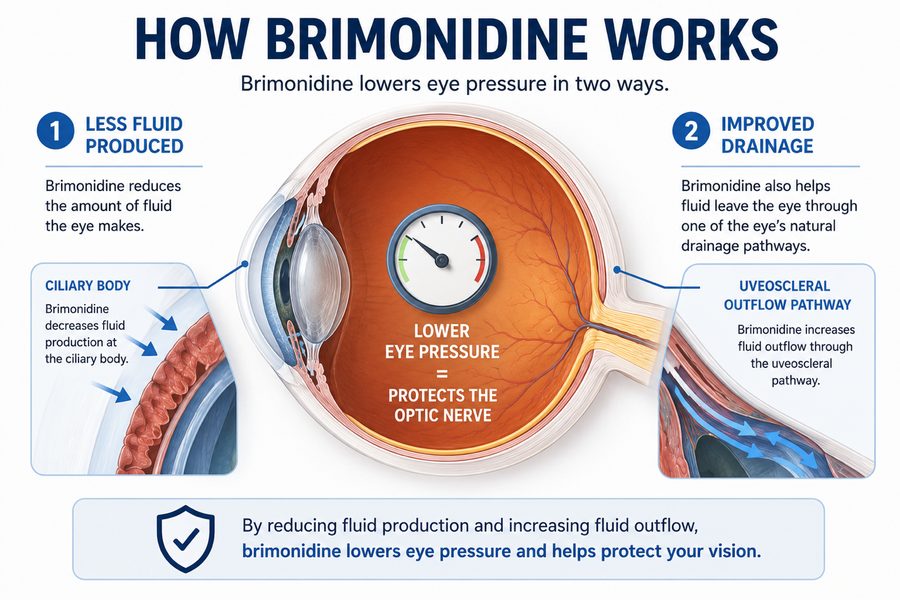
Our eyes are constantly producing a clear fluid that helps nourish the inside of the eye and maintain its normal shape.
Normally, this fluid drains away at the same rate it is produced. If too much fluid remains inside the eye, the pressure rises. Over time, elevated eye pressure can damage the optic nerve, leading to glaucoma.
Brimonidine works in two different ways.
First, it reduces the amount of fluid one's eye produces.
Second, it helps some of that fluid drain out more efficiently through one of the eye's natural drainage pathways.
You can think of it like turning the faucet down while also helping the drain work a little better.
By lowering the amount of fluid inside the eye, brimonidine helps reduce eye pressure and protect the optic nerve from further damage.
Why Is Lowering Eye Pressure So Important?
At this time, lowering eye pressure is the only treatment that has consistently been shown to slow or reduce the progression of glaucoma.
Brimonidine cannot restore vision that has already been lost, but lowering eye pressure helps reduce the risk of additional optic nerve damage.
The goal of treatment is to preserve an individual's vision for years to come.
How Much Can Brimonidine Lower Eye Pressure?
Every patient responds differently, but studies have shown that brimonidine typically lowers eye pressure by about 20% from baseline.
Because it is somewhat less potent than prostaglandin analogs such as latanoprost, brimonidine is commonly used:
- Along with another glaucoma medication
- When additional pressure lowering is needed
- When a patient cannot tolerate another medication
- Before or after certain glaucoma laser procedures to reduce temporary pressure spikes
Most patients use brimonidine two or three times each day, depending on the specific formulation and their ophthalmologist's recommendations.
Common Side Effects

Like any medication, brimonidine can cause side effects. Fortunately, most are mild and improve after stopping the medication.
Eye Redness
Some patients notice mild redness after using the drops. This is usually temporary.
Burning or Stinging
A brief burning or stinging sensation may occur immediately after placing the eye drop.
Dry Eyes or Blurred Vision
Some people experience temporary blurred vision, dryness, or mild irritation shortly after using the medication.
Allergic Eye Reaction
One of the more common reasons patients stop brimonidine is the development of an allergic reaction.
Unlike many medication allergies, this often develops weeks or even months after starting treatment rather than immediately.
Symptoms may include:
- Increasing redness
- Itching
- Tearing
- Swollen eyelids
- A feeling that something is in the eye
If these symptoms develop, a patient should contact their ophthalmologist rather than simply stopping the medication on their own.
Dry Mouth
Because a small amount of the medication can be absorbed into the bloodstream, some patients notice a dry mouth. This is one of the most common non-eye side effects but is usually mild.
Sleepiness or Fatigue
Some patients report feeling slightly sleepy, tired, or less energetic while using brimonidine.
This side effect is generally mild in adults but may be more noticeable in older adults or those taking medications that also cause drowsiness.
Are Serious Side Effects Common?
Serious side effects are uncommon.
However, brimonidine should be used with extra caution in certain individuals, including young children, because it can affect the central nervous system. For this reason, brimonidine is generally not prescribed for children younger than two years of age and is used cautiously in older children.
Adults who have certain medical conditions or who take medications for depression or blood pressure should make sure their ophthalmologist knows their complete medical history before starting brimonidine.
A patient should, in general, not stop using a glaucoma medication without discussing it with their ophthalmologist, as eye pressure may rise without noticeable symptoms.
Tips for Using Brimonidine

To get the best results:
- Use the medication exactly as prescribed.
- Wash one's hands before using eye drops.
- Avoid touching the bottle tip to their eye or eyelashes.
- If someone uses more than one eye medication, wait at least five minutes between drops.
- Gently close one's eyelids for a minute or two after placing the drop.
- One can also gently press on the inside corner of their eye (not on the eyeball itself) near the nose for about one minute. This simple technique helps keep more of the medication in the eye and may reduce the amount absorbed into the bloodstream, decreasing the risk of side effects.
- If someone wears contact lenses, they should ask their ophthalmologist when they should be removed and reinserted around their eye drop schedule.
Consistency is one of the most important factors in successfully treating glaucoma.
Is Brimonidine Right for Everyone?
Not necessarily.
Every patient has different treatment goals, eye pressure targets, medical conditions, and lifestyles.
For some people, brimonidine is an excellent option by itself. For many others, it works best when combined with another glaucoma medication to achieve additional pressure lowering.
The best treatment is always the one that's tailored to one's individual needs.
Works Cited
- Cantor LB. The Evolving Pharmacotherapeutic Profile of Brimonidine, an α2-Adrenergic Agonist, After Four Years of Clinical Experience. Clinical Therapeutics. 2000;22(5):500-549. PMID: 10869879.
- Burke J, Schwartz M. Preclinical Evaluation of Brimonidine. Survey of Ophthalmology. 1996;41(Suppl 1):S9-S18. PMID: 8938569.
- Katz LJ. Brimonidine Tartrate 0.2% Twice Daily Versus Timolol 0.5% Twice Daily: One-Year Results in Glaucoma and Ocular Hypertension. American Journal of Ophthalmology. 1999;127(1):20-26. PMID: 9932994.
- Lee DA, Higginbotham EJ. Glaucoma and Its Treatment: A Review. American Journal of Health-System Pharmacy. 2005;62(7):691-699.
- National Center for Biotechnology Information. Brimonidine. StatPearls Publishing. Updated 2024. Available from the NCBI Bookshelf.
- European Glaucoma Society Terminology and Guidelines for Glaucoma, 5th Edition. British Journal of Ophthalmology. 2021;105(Suppl 1):1-169.
- Prum BE Jr, et al. Primary Open-Angle Glaucoma Preferred Practice Pattern®. American Academy of Ophthalmology. Ophthalmology. 2021.