
A common misconception about glaucoma is:
“My eye pressure is normal, so I don’t have to worry about glaucoma.”
Unfortunately, that is not always true.
Eye pressure is an important part of a glaucoma evaluation, but glaucoma is ultimately a disease of the optic nerve, not simply a disease of high eye pressure.
What Is a “Normal” Eye Pressure?
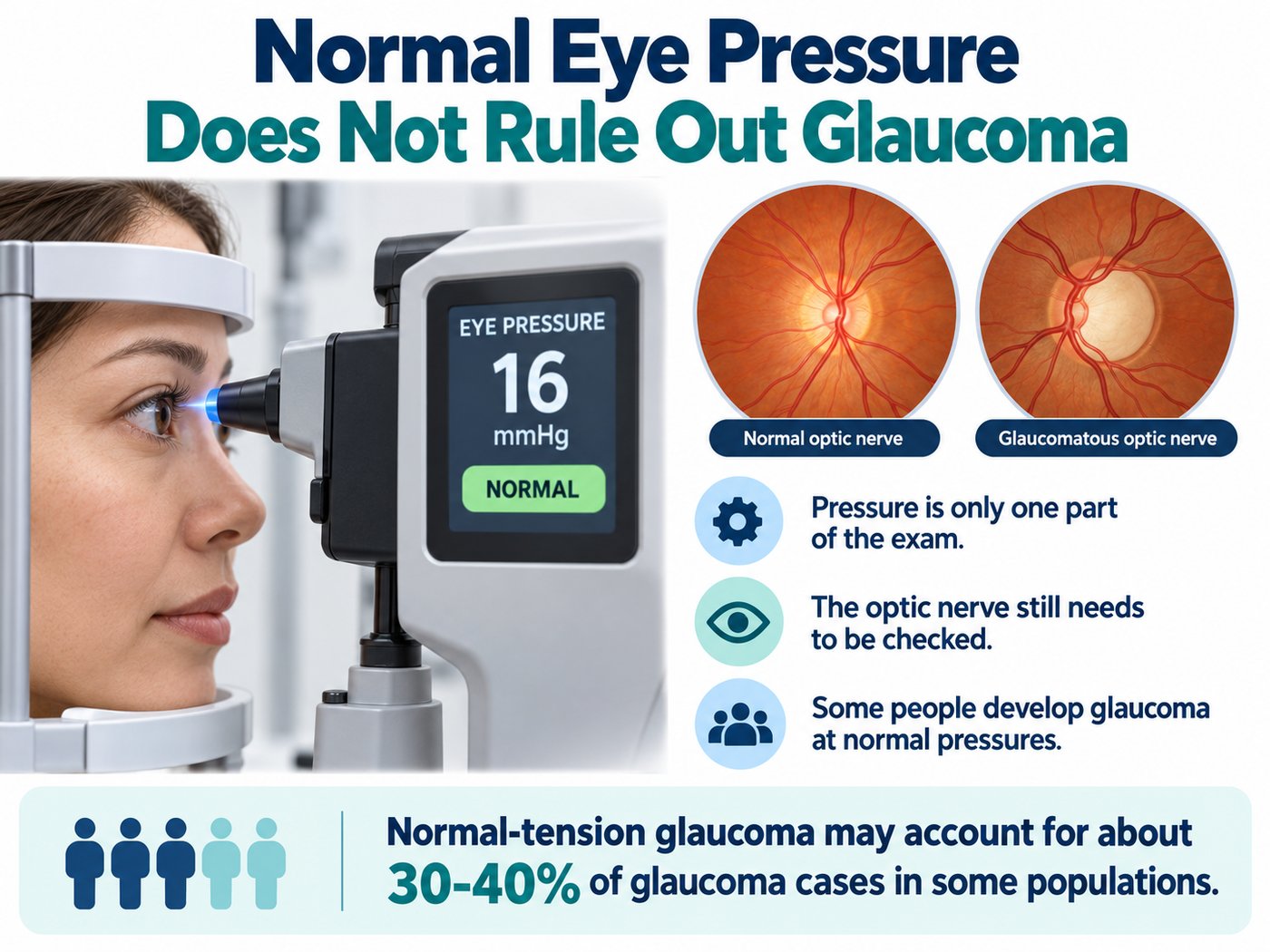
Eye pressure, also called intraocular pressure (IOP), is usually measured in millimeters of mercury, or mmHg.
Traditionally, an eye pressure of approximately 10 to 21 mmHg has been considered within the normal range.
But this does not mean that every pressure below 21 is safe for every person.
Some people can develop glaucoma damage even when their eye pressure never measures above the traditional normal range.
This is called normal-tension glaucoma.
How Common Is Normal-Tension Glaucoma?
Normal-tension glaucoma is not rare.
Estimates vary depending on the population being studied, but normal-tension glaucoma may account for roughly 30 to 40% of glaucoma cases in some populations.
In the well-known Baltimore Eye Survey, approximately half of patients identified with primary open-angle glaucoma had an untreated eye pressure below 22 mmHg.
Normal-tension glaucoma appears to be particularly common in some Asian populations.
The important point is simple:
A normal pressure reading does not rule out glaucoma.
Why Can Glaucoma Occur With Normal Eye Pressure?
We do not completely understand why some optic nerves become damaged at pressures that other eyes tolerate without difficulty.
Everyone’s optic nerve is different.
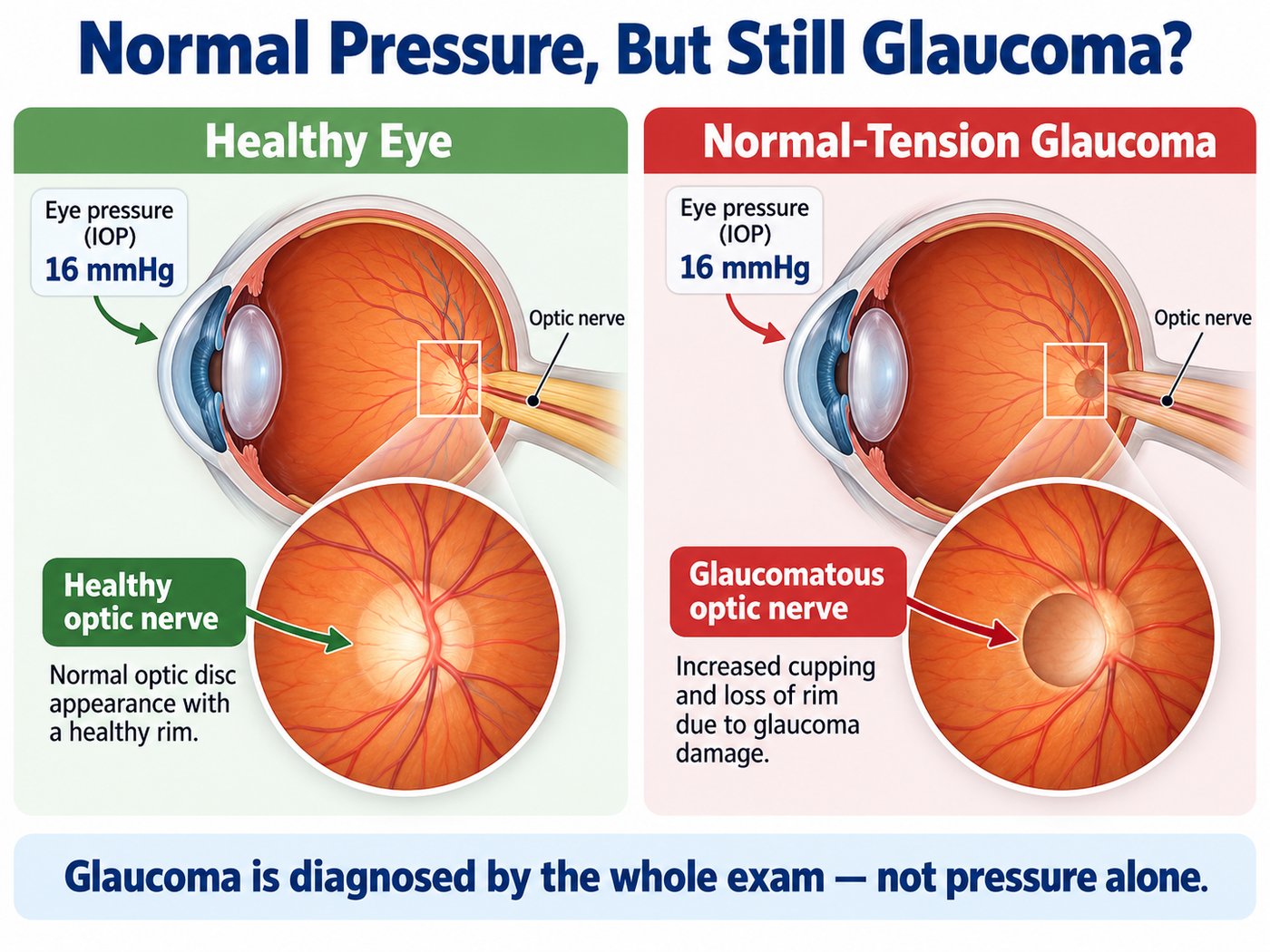
For some people, a pressure of 18 mmHg may be perfectly safe. For another person with a more vulnerable optic nerve, that same pressure may still be too high.
Researchers also believe that factors other than eye pressure may contribute to normal-tension glaucoma, including differences in blood flow and susceptibility of the optic nerve.
Who Is at Higher Risk?
Factors associated with normal-tension glaucoma can include:
- Older age
- Family history of glaucoma
- Nearsightedness (myopia)
- Asian ancestry
- Migraine headaches
- Low blood pressure, particularly at night
- Obstructive sleep apnea
- Certain conditions affecting circulation or blood flow
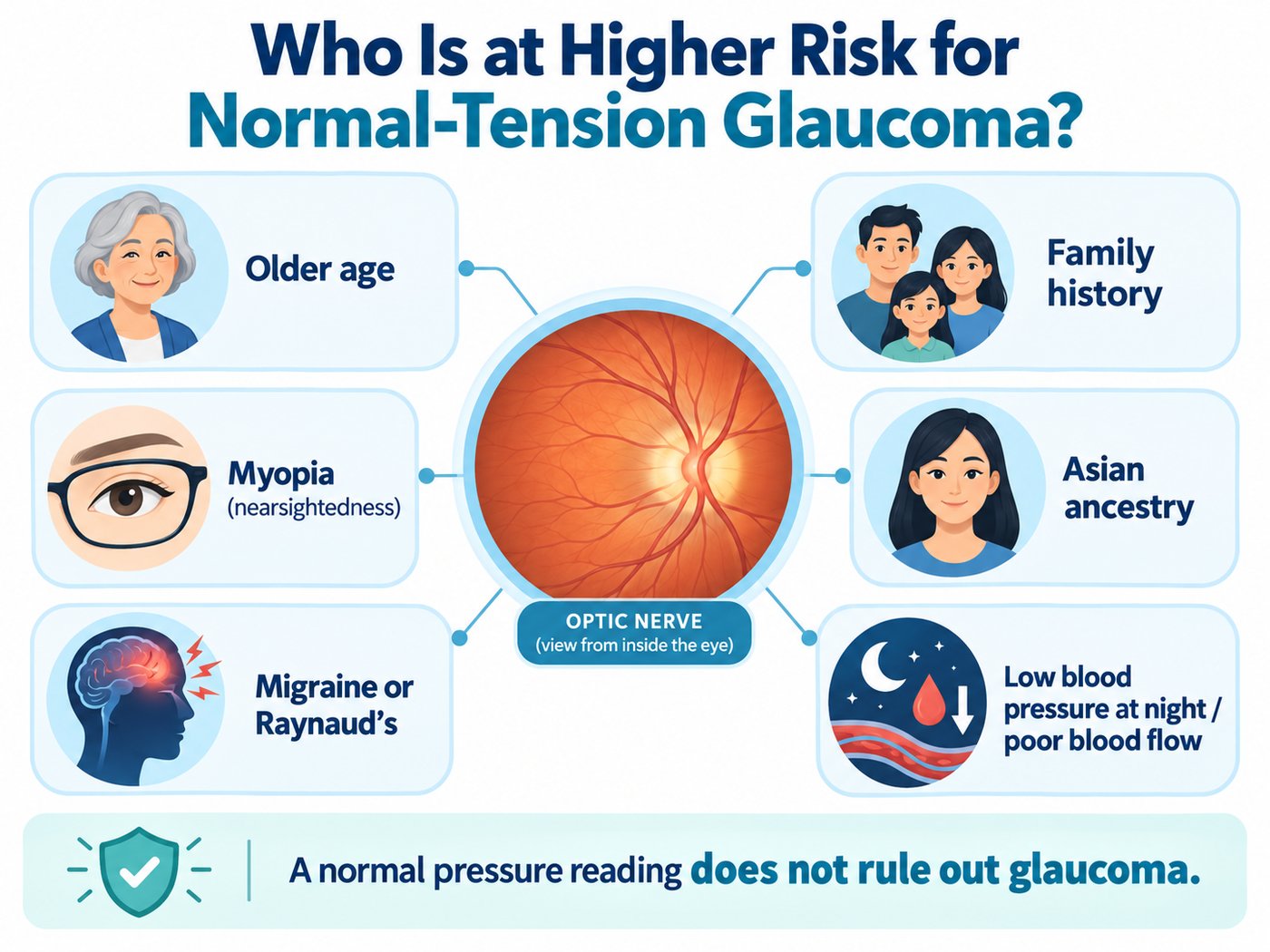
Having one of these risk factors does not mean that you have glaucoma, but it may increase the importance of a complete eye examination.
If the Pressure Is Normal, How Do We Find Glaucoma?
This is why ophthalmologists do more than simply check eye pressure.
A glaucoma evaluation may include examining the optic nerve, measuring the thickness of the retinal nerve fiber layer with OCT imaging, and performing visual field testing when appropriate.
The appearance and health of the optic nerve are particularly important.
Someone can have an eye pressure of 16 or 18 mmHg and still have glaucoma if there are characteristic signs of optic nerve damage.
Can Normal-Tension Glaucoma Be Treated?
Yes.
Interestingly, even when someone’s eye pressure begins in the normal range, lowering it further can protect the optic nerve.
The Collaborative Normal-Tension Glaucoma Study found that reducing eye pressure by approximately 30% significantly reduced the likelihood of glaucoma progression in appropriately selected patients.
Treatment may include:
- Glaucoma eye drops
- Selective laser trabeculoplasty (SLT)
- Minimally invasive glaucoma surgery
- Traditional glaucoma surgery in more advanced cases
The appropriate treatment depends on the severity of glaucoma, the patient’s starting pressure, and whether the disease is progressing.
The Bottom Line
Normal eye pressure does not automatically mean that your eyes are free of glaucoma.
Eye pressure is an important risk factor, but it is only one part of the picture.
A complete glaucoma evaluation considers your eye pressure, optic nerve appearance, imaging, risk factors, and other examination findings.
So if you have been told that your pressure is “normal,” that is certainly reassuring, but it should not replace a proper examination of the optic nerve, particularly if you have other risk factors for glaucoma.
Works Cited
- Sommer A. Glaucoma risk factors observed in the Baltimore Eye Survey. Current Opinion in Ophthalmology. 1996;7(2):93-98. doi:10.1097/00055735-199604000-00016.
- Collaborative Normal-Tension Glaucoma Study Group. The effectiveness of intraocular pressure reduction in the treatment of normal-tension glaucoma. American Journal of Ophthalmology. 1998;126(4):498-505. doi:10.1016/S0002-9394(98)00272-4.
- Collaborative Normal-Tension Glaucoma Study Group. Comparison of glaucomatous progression between untreated patients with normal-tension glaucoma and patients with therapeutically reduced intraocular pressures. American Journal of Ophthalmology. 1998;126(4):487-497. doi:10.1016/S0002-9394(98)00223-2.
- American Academy of Ophthalmology EyeWiki. “Normal Tension Glaucoma.” Updated June 2, 2026.
This article is intended for general educational purposes and is not a substitute for an examination or individualized medical advice from your ophthalmologist.