
If you were diagnosed with glaucoma and had a choice between using eye drops every day or having a quick laser treatment in the office, which would you choose?
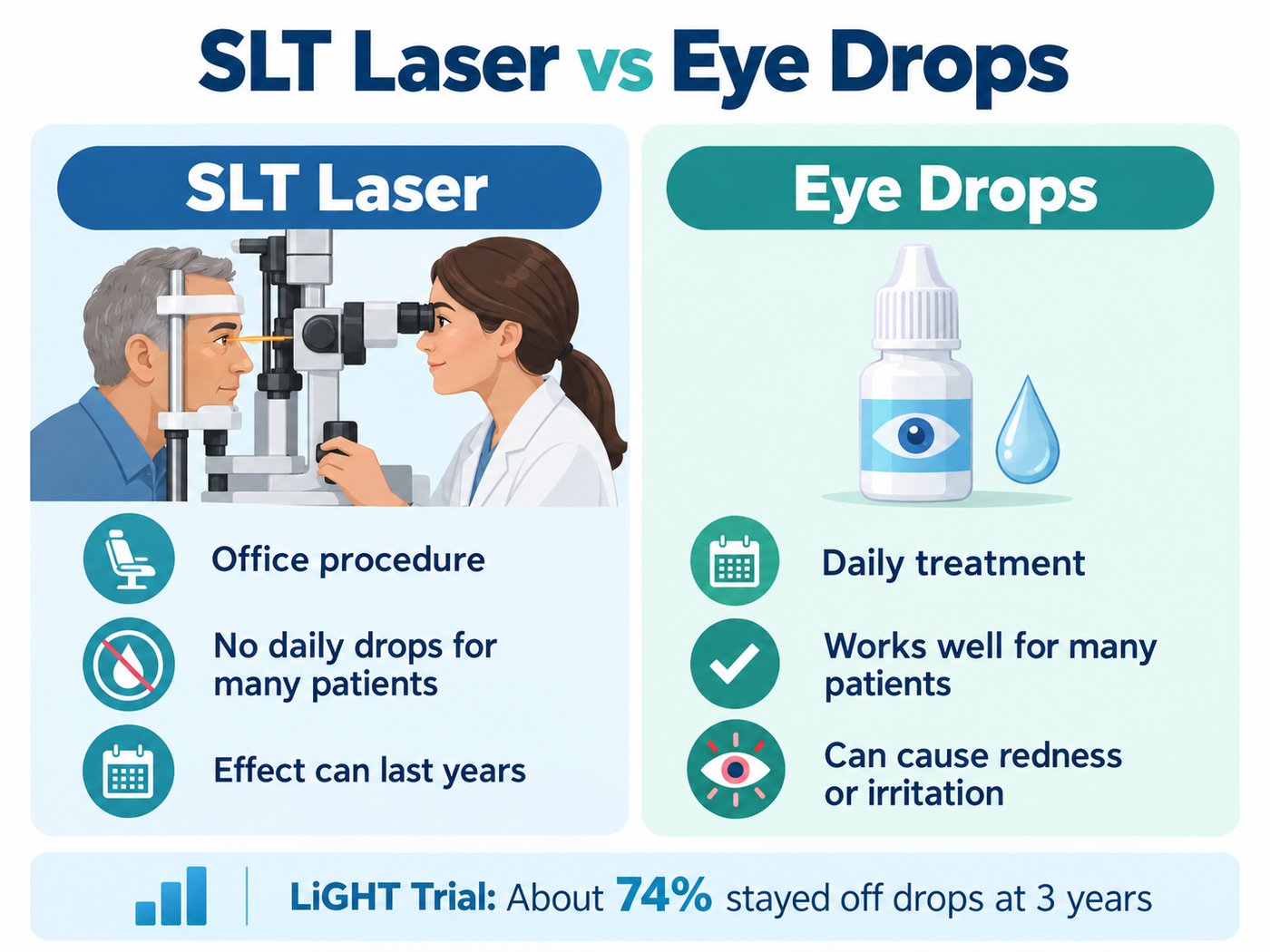
For many years, glaucoma eye drops were the usual first treatment for lowering eye pressure. Today, Selective Laser Trabeculoplasty, or SLT, is increasingly used as a first treatment for many patients with open-angle glaucoma.
Both treatments can work well.
What Is SLT?

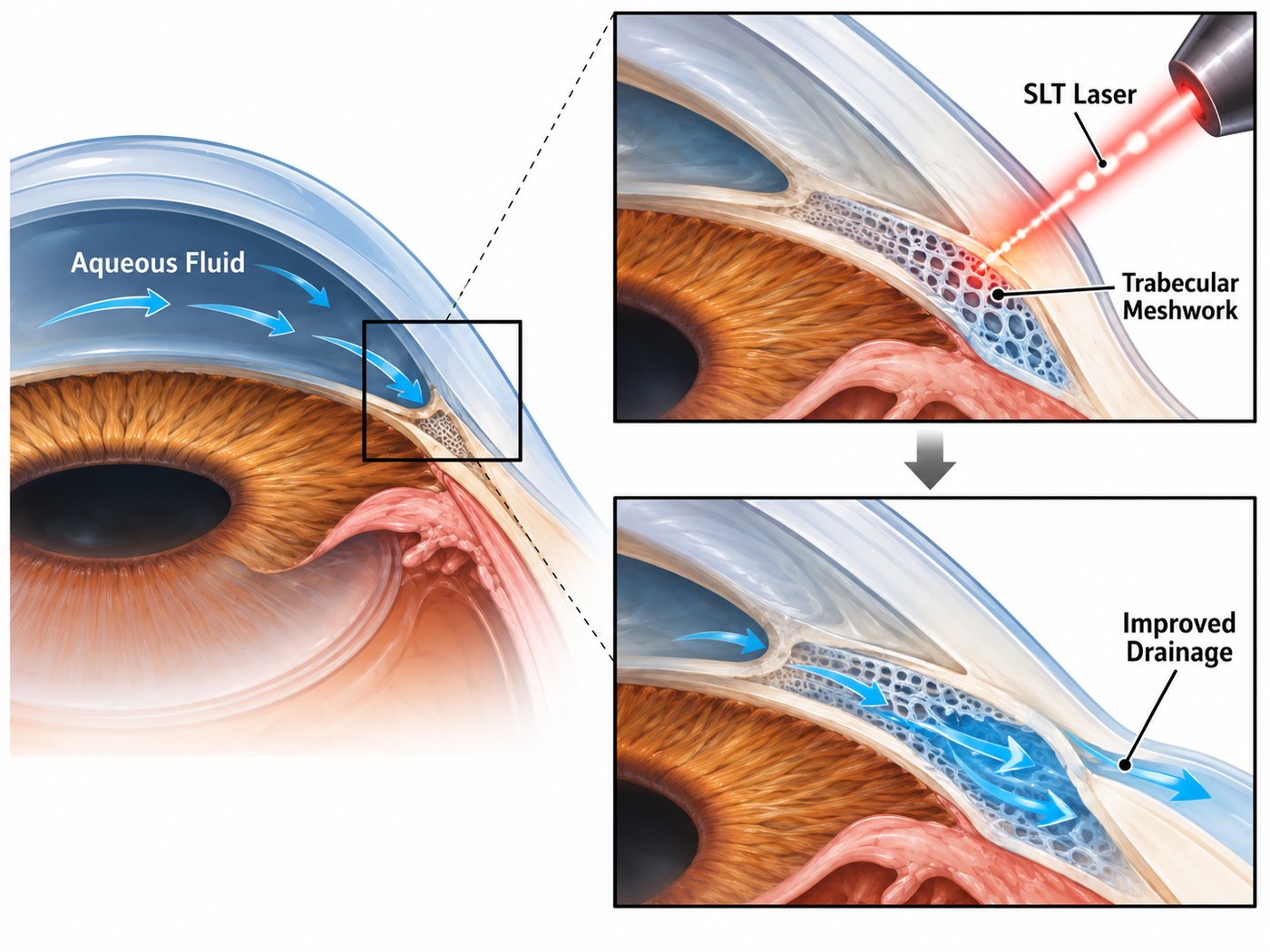
SLT is a laser treatment that helps fluid drain out of the eye more efficiently, which can lower eye pressure.
The procedure is performed in the office, usually takes only a few minutes, and does not involve cutting into the eye.
How Effective Is SLT?
One of the largest studies comparing SLT with glaucoma eye drops is called the LiGHT Trial.
Patients with newly diagnosed glaucoma or high eye pressure were treated first with either SLT or glaucoma eye drops.
The results were encouraging:
About 74% of patients treated first with SLT were able to control their eye pressure without glaucoma drops at 3 years.
Even more importantly, the benefit often lasted.
At 6 years, approximately 70% of eyes originally treated with SLT remained controlled without needing glaucoma medication or glaucoma surgery.
In simple terms, many patients who have SLT can go years without needing a daily glaucoma drop.
What Are the Advantages of SLT?
For the right patient, SLT can offer several benefits:
- No daily medication to remember
- No prescription refills
- Fewer problems with redness, irritation, or other eye-drop side effects
- The treatment can often be repeated if its effect wears off
Are There Downsides?
SLT does not work equally well for everyone.
Some patients may still need glaucoma drops afterward, and the effect of the laser can decrease over time.
Temporary irritation, inflammation, blurred vision, or a brief increase in eye pressure can also occur after treatment.
Serious complications are uncommon.
Are Eye Drops Still a Good Option?
Yes.
Glaucoma eye drops remain very effective and may be the better choice for some patients.
Drops and SLT are also not mutually exclusive. A patient can have SLT and still use medication later if additional pressure lowering is needed.
Which Treatment Is Right for You?
For many patients with open-angle glaucoma, SLT can now be considered alongside eye drops as a first treatment, rather than something that is only used after medications fail.
The goal is the same either way: lower the eye pressure enough to protect the optic nerve and preserve vision over time.
If you have glaucoma or high eye pressure, ask your ophthalmologist whether SLT may be an option for you.
Key Numbers
About 3 out of 4 patients treated first with SLT were able to stay off glaucoma drops at 3 years.
About 7 out of 10 eyes remained controlled without medication or glaucoma surgery at 6 years.
References
- Gazzard G, Konstantakopoulou E, Garway-Heath D, et al. Selective laser trabeculoplasty versus eye drops for first-line treatment of ocular hypertension and glaucoma (LiGHT): a multicentre randomised controlled trial. Lancet. 2019;393(10180):1505-1516.
- Gazzard G, Konstantakopoulou E, Garway-Heath D, et al. Laser in Glaucoma and Ocular Hypertension (LiGHT) Trial: six-year results of primary selective laser trabeculoplasty versus eye drops for the treatment of glaucoma and ocular hypertension. Ophthalmology. 2023;130(2):139-151.
This article is for general educational purposes and is not a substitute for an eye examination or individualized medical advice.