
Steroids are very useful medications. They are commonly prescribed for inflammation, allergies, asthma, autoimmune diseases, and many eye conditions.
But steroids can also have an important side effect that many patients do not know about: they can raise the pressure inside the eye.
How Can Steroids Affect Eye Pressure?
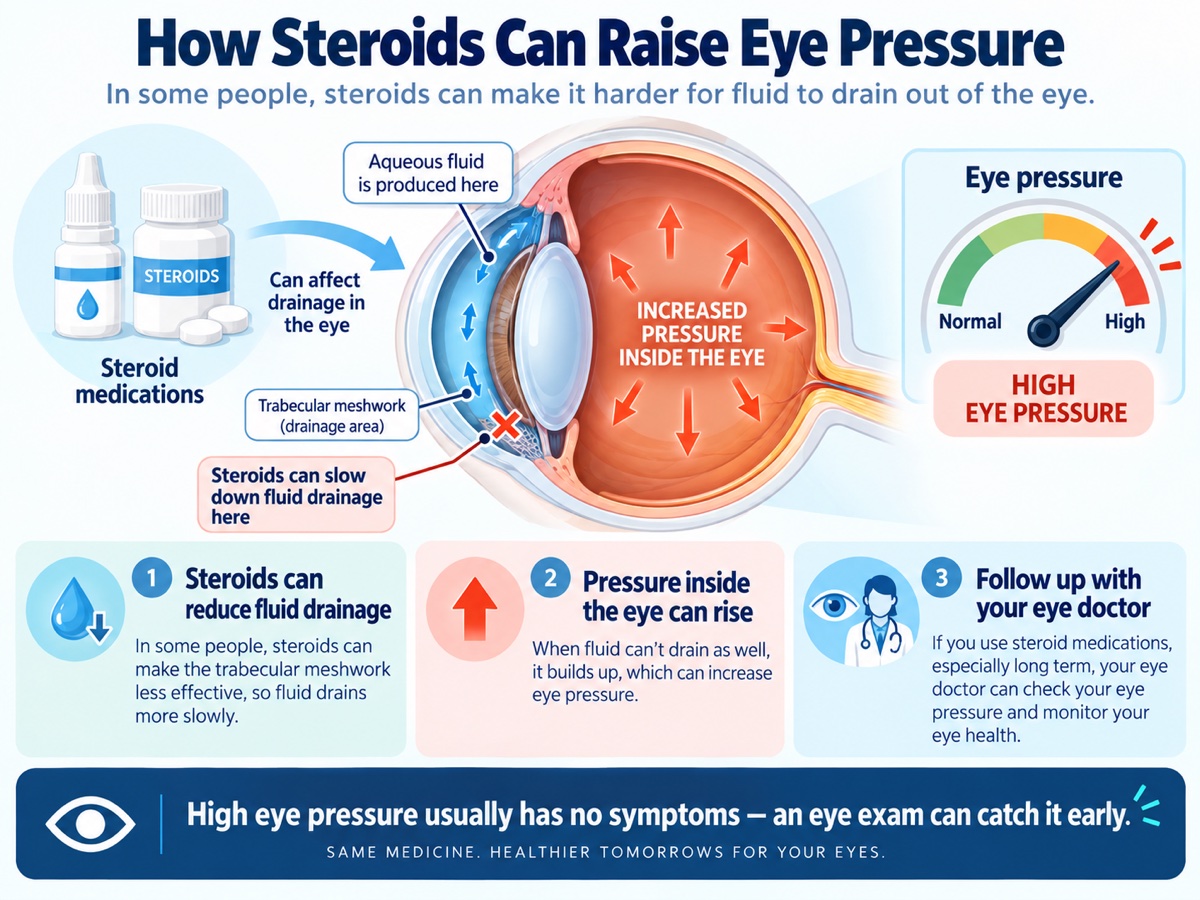
One's eye continuously produces fluid that normally drains out through a tiny drainage system.
In some people, steroids can make it harder for this fluid to leave the eye. This causes the eye pressure to rise.
If the pressure becomes too high and remains elevated, it can eventually damage the optic nerve. This is called steroid-induced glaucoma.
The problem is that high eye pressure usually does not hurt and may not cause any noticeable change in vision at first. Someone can therefore have significantly elevated eye pressure without realizing it.
What Types of Steroids Can Cause This?
Steroid-related eye pressure problems are most commonly associated with steroid eye drops, but other forms of steroids can sometimes affect eye pressure as well, including:
- Steroid injections in or around the eye
- Steroid pills or IV medications
- High-dose inhaled steroids
- Steroid creams, particularly when used around the eyelids or face
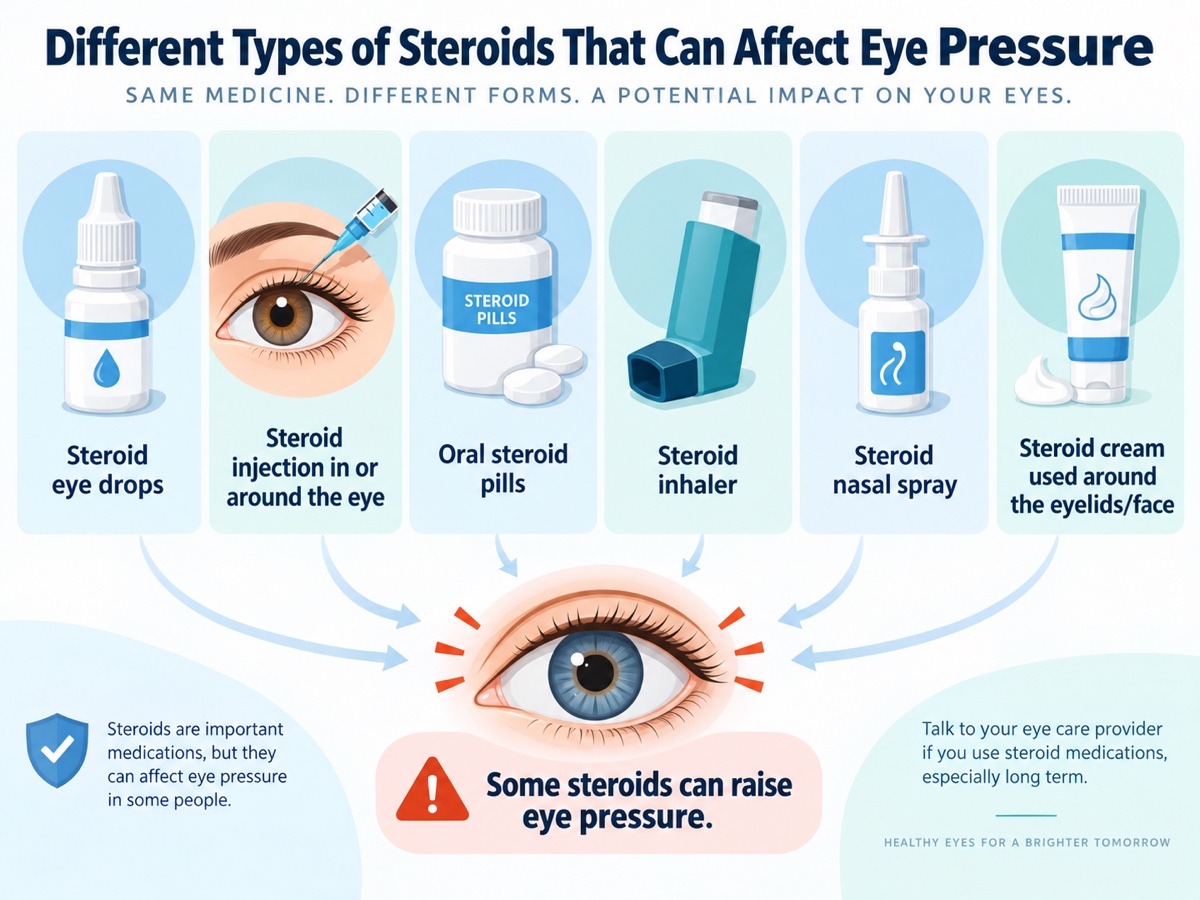
Steroid nasal sprays generally appear to have a much lower risk for most people, although one's individual risk may be different if they already have glaucoma or other risk factors.
How Quickly Can Eye Pressure Rise?
With steroid eye drops, an increase in eye pressure most commonly appears after approximately 3 to 6 weeks, although it can occur sooner or much later.
Not everyone experiences this response. Some people are much more sensitive to steroids than others. People who already have glaucoma or have a family history of glaucoma may be more likely to develop a significant pressure increase.
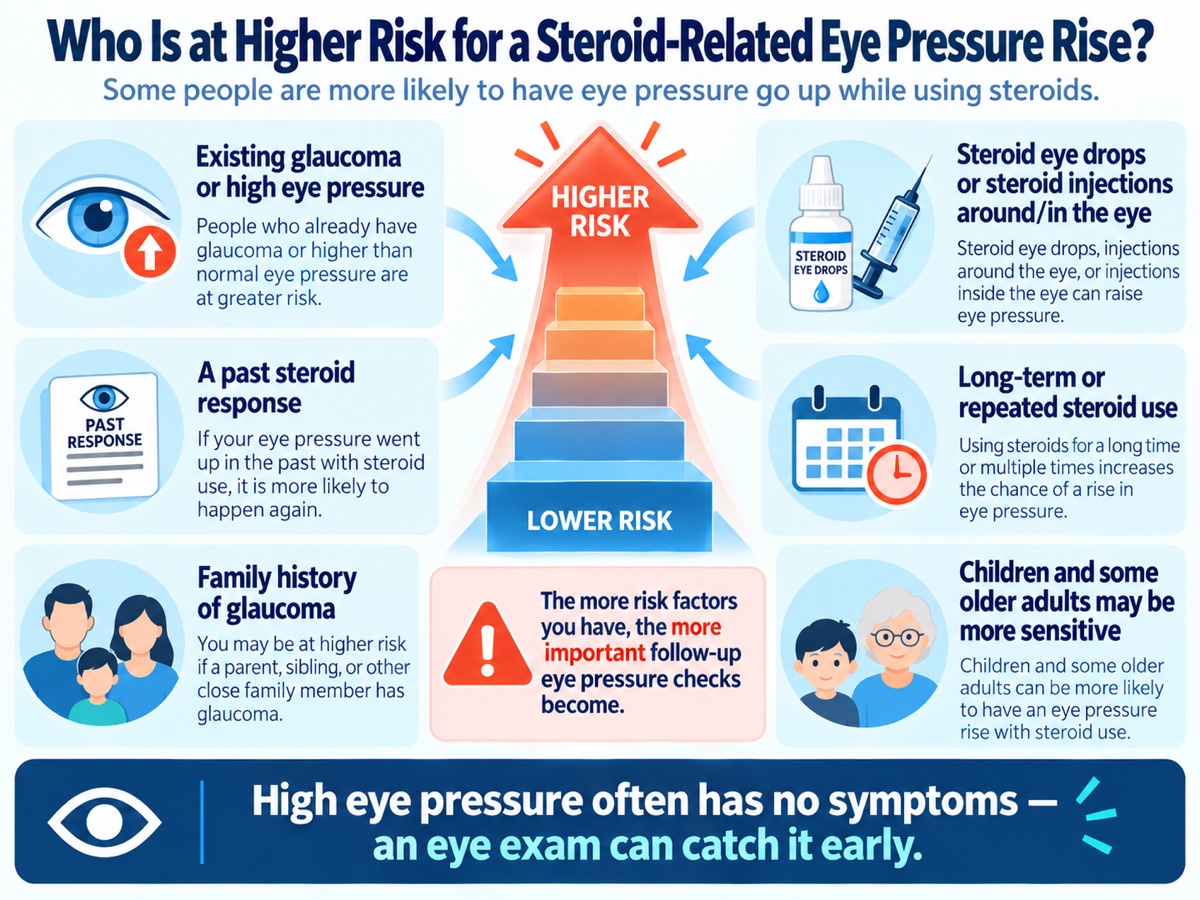
About one in three people may experience some increase in eye pressure when exposed to strong steroid eye drops, while a much smaller group develops a very large pressure increase. The risk is considerably higher in people who already have glaucoma. Steroid injections or implants inside or around the eye can also raise eye pressure in roughly 15 to 30% or more of patients, depending on the medication.
Most steroid-related pressure increases do not become glaucoma if they are detected and treated. The problem is that high eye pressure usually causes no symptoms, which is why follow-up eye-pressure checks are important.
The Most Important Thing: Have the Eye Pressure Checked
Steroids are often necessary medications, and one should not stop a prescribed steroid on their own.
Instead, if someone is using steroid eye drops or receiving steroids for an extended period of time, particularly if someone already has glaucoma or is at increased risk for it, make sure their eye doctor knows.
A simple eye pressure check can often identify a steroid response before permanent vision damage occurs.
If someone is going to be using steroids for more than a short period of time, ask their eye doctor: "Do I need to have my eye pressure checked while I am taking this medication?"
Regular eye examinations are one of the simplest ways to prevent steroid-related eye pressure problems from becoming steroid-induced glaucoma.
The Bottom Line
Steroids remain important, often necessary medications for many conditions, including several eye diseases. For most patients, the benefits of appropriate steroid treatment outweigh the risk to eye pressure.
Still, anyone using steroid eye drops, injections, pills, high-dose inhalers, or steroid creams around the eyes, especially for more than a short period, should make sure their eye doctor knows and ask whether their eye pressure should be monitored.
Because high eye pressure has no symptoms of its own, a simple pressure check is what catches a steroid response early, while it is still easy to manage.
Works Cited
- Kersey JP, Broadway DC. Corticosteroid-Induced Glaucoma: A Review of the Literature. Eye. 2006;20:407-416.
- Phulke S, et al. Steroid-Induced Glaucoma: An Avoidable Irreversible Blindness. Journal of Current Glaucoma Practice. 2017;11(2):67-72.
- Razeghinejad MR, et al. Steroid-Induced Glaucoma: Epidemiology, Pathophysiology, and Clinical Management. Survey of Ophthalmology. 2020;65(4):458-472. doi:10.1016/j.survophthal.2020.01.002.
- Jones R III, Rhee DJ. Corticosteroid-Induced Ocular Hypertension and Glaucoma: A Brief Review and Update of the Literature. Current Opinion in Ophthalmology. 2006;17(2):163-167. doi:10.1097/01.icu.0000193079.55240.18.
- American Academy of Ophthalmology EyeWiki. Steroid-Induced Glaucoma. Updated January 30, 2026.
This article is intended for educational purposes and does not replace an individualized eye examination or medical advice from your ophthalmologist.